
Renovating a Tenement Bathroom in Scotland: What to Plan For
Tenement flats are a big part of life in Scottish towns and cities, and their bathrooms come with their own questions. Pipes are shared, stairs are narrow and the neighbours are a few feet away. None of this stops a good renovation. It just means a little more planning. Here is what we think about when we visit a tenement flat.
Why tenement bathrooms are different
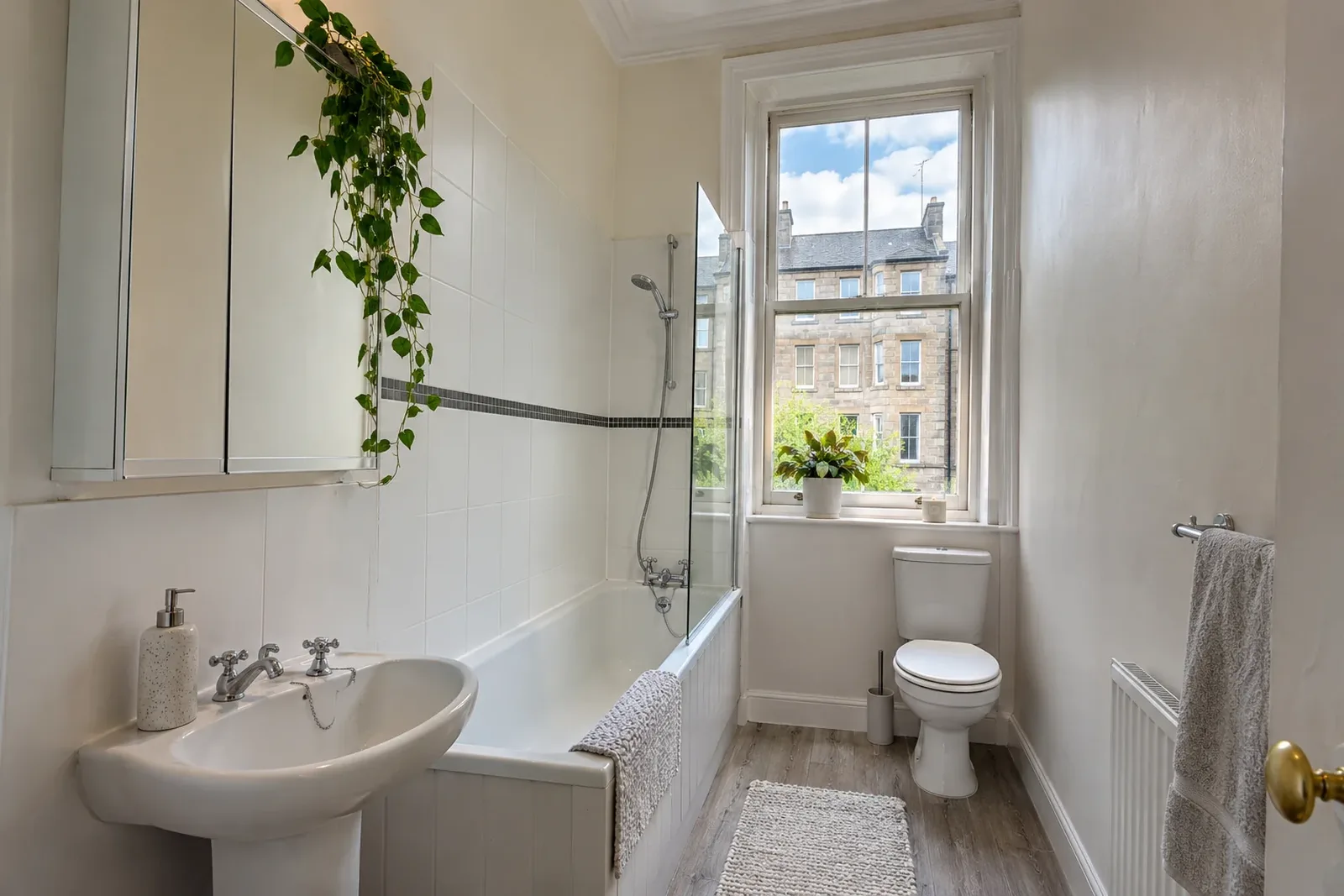
Tenements are the most common type of home in urban Scotland, and the older ones were built long before indoor bathrooms were normal. Many had a shared toilet on the stair landing, and the bathroom in your flat may have been added later in a space that was never designed for it.
That history is why tenement bathrooms are often small, oddly shaped or tucked behind a chimney breast. It is also why they are so good to renovate. A well-planned layout in a small room can feel much larger.
Stairs, access and parking
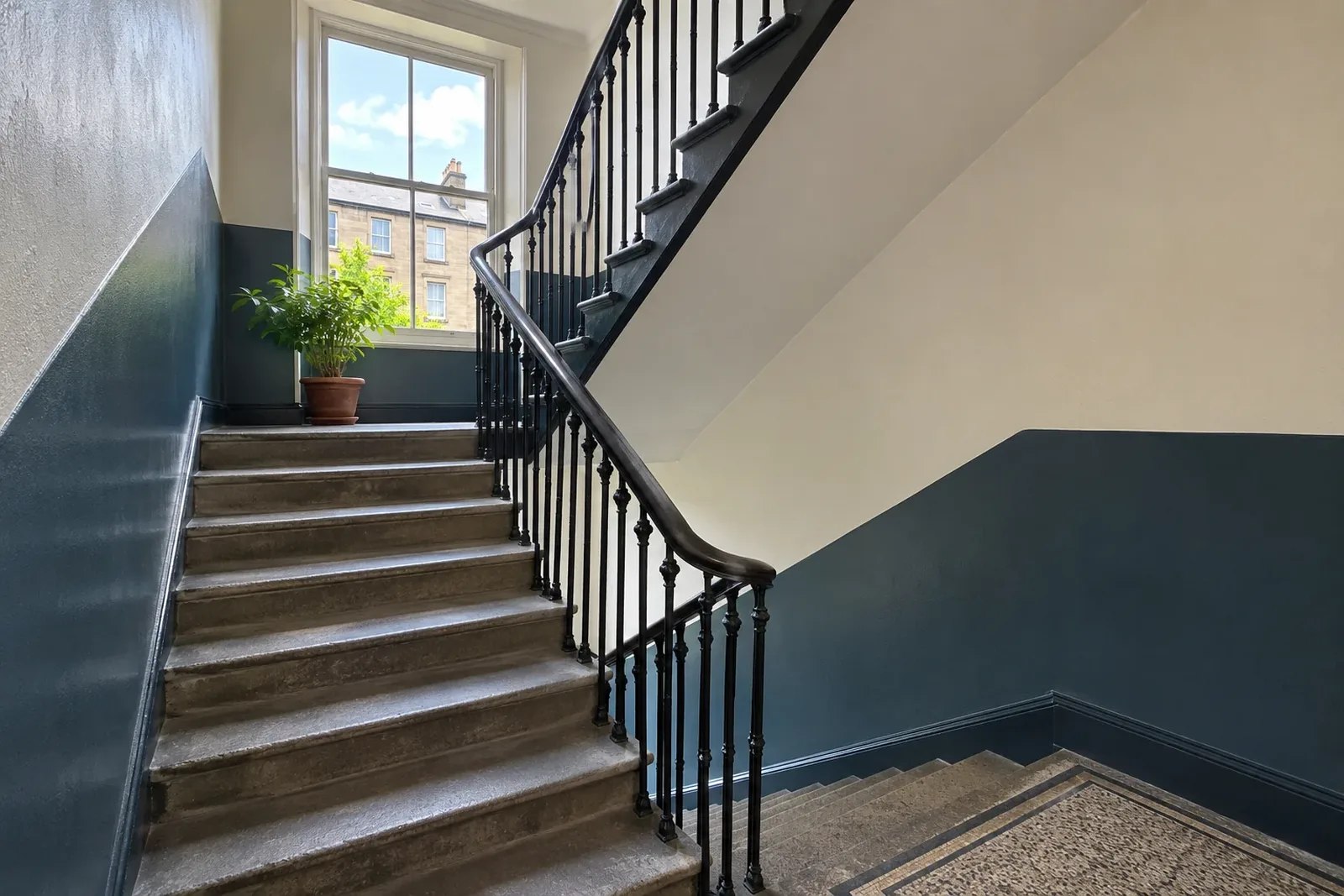
Everything for the job has to come up the stair, and the old bathroom has to come down. Baths, trays, boards, sand and cement are heavy. A third-floor flat with a tight turn on the landing takes longer than a ground-floor house, and a good plan allows for that.
Check where the fitters can park. In many Scottish cities, tenement streets have permits or limited spaces. Ask your council about a temporary permit or suspension if the street needs one, and let us know so we can plan deliveries around it.
A few other points help the job go smoothly:
- Protect the common stair. We lay floor covering and take care, but let your neighbours know.
- Agree working hours. Noisy work in a shared building is best kept to normal daytime hours.
- Keep a clear route from the front door to the bathroom.
Building rules, titles and neighbours
Under the Tenements (Scotland) Act 2004, the ground, foundations, external walls and roof are common property unless your title deeds say otherwise. Your own flat is yours, and renovating the inside of your bathroom is normally your business. But the title deeds come first, so read them if you are unsure, and ask your solicitor if anything is unclear.
Some work can need a building warrant from your council, particularly where you change drains or structure. Flats in a conservation area, such as Marchmont, Meadows and Bruntsfield in Edinburgh, may have extra rules for changes visible from outside, such as a new extractor vent through an outside wall. Check with your council before you plan one.
If you rent out the flat, or the building has a factor, tell them before you start. It avoids awkward calls later.
Ventilation without a window
Plenty of tenement bathrooms have no window, or only a small one. The Scottish building standards ask for trickle ventilation and a fan with a minimum airflow in new bathrooms, and a bathroom without a window needs particular care. The fan needs a route to the outside, and in a flat that can mean running a duct through a wall or up to a shared vent.
If your bathroom has no opening window, ask how the fan will be ducted and where the air will go. Some councils also ask that a windowless bathroom's fan is wired so the light and fan can be controlled separately. Check your local rules, and we can talk you through the options.
Floors, walls and old surprises
Old tenements have thick, solid walls and floors that are not always flat. Plastered walls may have layers of old paint, or lath and plaster behind them. A level floor is the base for everything, so we check this early.
If the floor is timber, we look for movement and damp. A new shower tray or heavy tiles need a firm base. It is better to deal with a weak board while the room is empty than to find it after the tiles are on.
Choosing fittings for a small tenement room
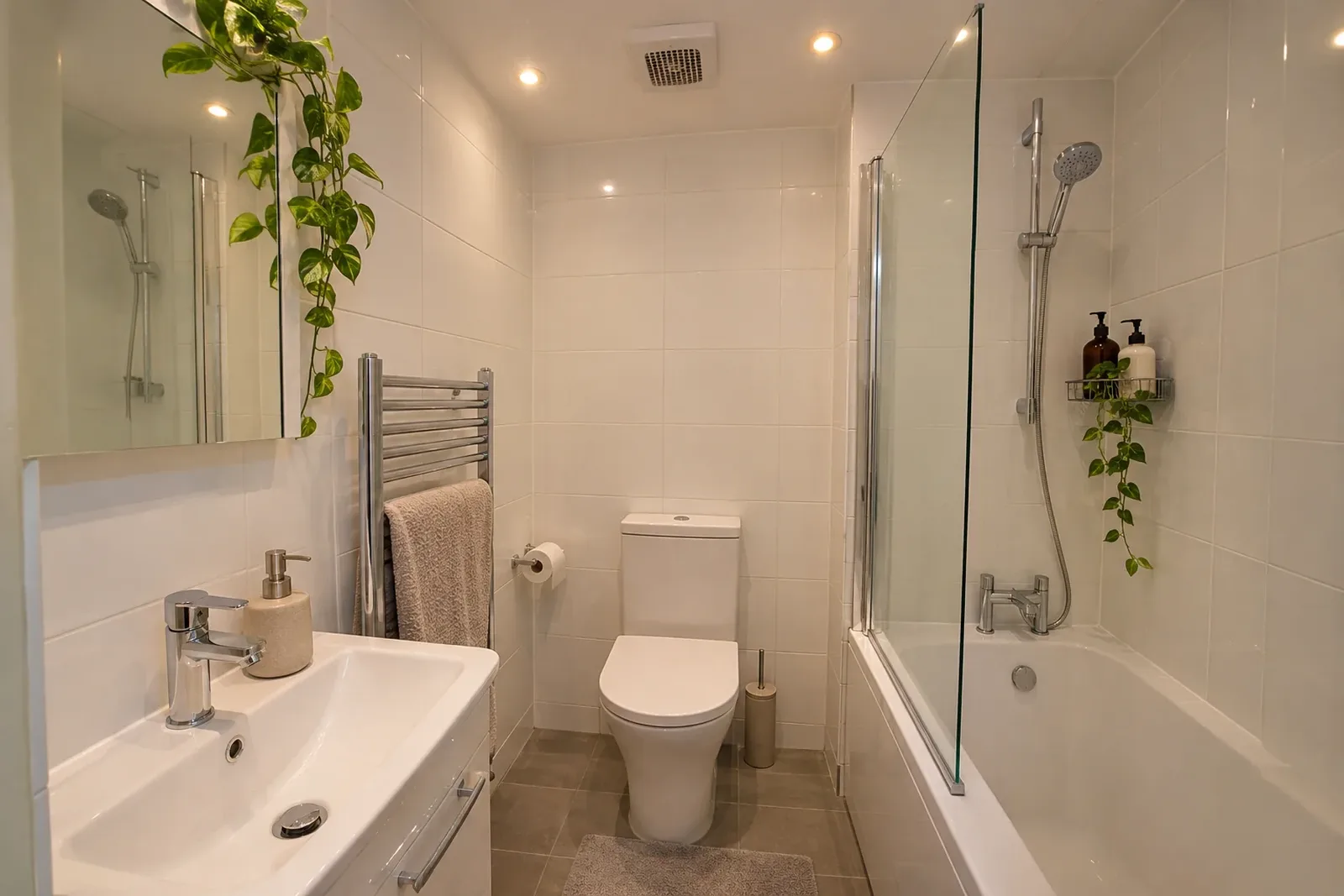
In a small room, shallow-depth basins and compact toilets give you space back. A wall-hung vanity leaves the floor visible, which makes the room feel bigger. A shower with a glass screen usually looks lighter than a curtain. If the bath stays, a slightly shorter or narrower one can make a real difference to the room.
Our guide to storage ideas for small family bathrooms has ideas that work well when the room is tight.
Planning the renovation from start to finish
Once the plan is agreed, the job follows the same steps as any bathroom. We take out the old room, deal with the pipes and floor, board and tile, fit the suite and finish. You can see the order and timings in how long a bathroom renovation takes.
We cover flats and tenements in cities and towns across Scotland. Our bathroom renovations in Glasgow and in Edinburgh pages show where we work.
Your next step
If you live in a tenement flat and want to change your bathroom, call us and describe the room. We can arrange a visit to look at the layout, the pipework and the access. Call now to talk it through, or read about our bathroom renovations first.
Common questions
Call nowDo I need my neighbours' permission to renovate my tenement bathroom?
Usually not for work inside your own flat, but your title deeds come first and shared pipes or structure can change that. Tell neighbours before work starts and check your deeds if unsure.
Can I move the toilet in a tenement flat?
Sometimes, but the waste has to fall properly to the shared stack. The simplest layouts keep the toilet near where it is now.
Will my tenement bathroom job need a building warrant?
Like-for-like work often does not, but changes to drains, structure or outside vents can. Check with your local council before work starts.
What if my bathroom has no window?
It needs a fan ducted to the outside and trickle ventilation as far as the rules allow. We can explain the options for your flat.